


Having a full-time job usually means dedicating 40 hours - sometimes more - of your week to making a living. Some people don’t even have time to rest when they get home - having to cook, clean, take care of family, all while getting ready for the next day!
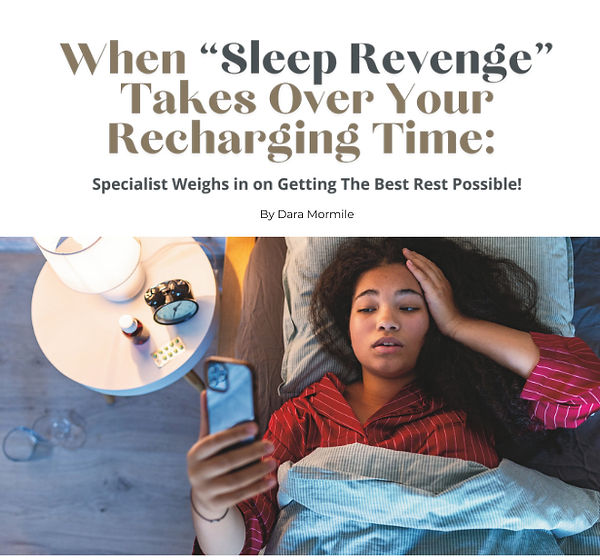
If you’re like me, that doomed daily feeling of “losing time” might cause cravings to regain any time back that you’ve spent working. Unfortunately, instead of hitting the hay at a decent time so we can recharge, we’re on our e-mails or social media.
Scrolling… Posting…Arguing… Commenting… Watching random reels that pique our brains’ interest…
What’s that old friend up to on Facebook? Political rant from my cousin? I want to see!
Whose Instagram story haven’t I viewed? And what’s new on that YouTube channel I subscribed to? Now that I think about it, which posts did I miss on Tic Toc and X —and how can I get in on the gossip? By the time you’re done switching from app to app, you don’t realize hours have gone by when you should have been asleep!
"There’s a big difference. Now, we’re not just watching a show or a movie,” Dr. Hu argued. “We’re interacting with each other, waiting for those responses and getting a high off the notification on our phones - it’s like a drug."
This self-sabotaging nightly habit - getting more ‘me time’ when you should be resting - is known as ‘Sleep Revenge’ or sleep procrastination. But you’re not just getting revenge by delaying sleep and ‘enjoying’ those midnight hours, you’re depriving your body and brain of the benefits that come with shutting yourself down!
Preferred Health Magazine spoke with Sleep Group Solution affiliate and Dental Sleep Medicine specialist Doctor Jerry Hu (DDS, DABDSM, DACSDD, DASBA, FACD, MICOI, FICOI, AFAAID, LVIF, FIAPA, FIADFE) about the detrimental aspects of ‘Sleep Revenge’ and how our interactions at nighttime impact our mental health.
So many of us live in a world of FOMO (fear of missing out) when it comes to social media, Dr. Hu said.
“You need at least seven and a half to eight hours of sleep as an adult to be able to function for the day, but there’s a cultural wave of always needing to know what’s going on and that’s impacting how much sleep we actually get,” said the specialist, who’s also an author and avid speaker on dental sleep medicine. “Everyone fears they’re going to miss something if they don’t spend sacrificial time catching up on TikTok, X, Facebook or Instagram…The bad thing about this trend is that when you’re up late, your brain is stimulated, your endorphins levels are up and it makes it harder to calm yourself down and fall asleep.”
Studies show that Americans lose over 300 hours of sleep every year as they wrestle with getting precious time for themselves. According to the Sleep Foundation, deprivation can result in trouble focusing, mood changes, irritability, and impaired mental/physical performance.
However, staying awake has always been the bane of a good night’s rest. Before social media, many of us kept our televisions on until the early hours of the morning - eager to catch a late night talk show or binge watch a good movie. Some might say the idea of ‘Sleep Revenge’ is not new - and that it’s no different from pre-cellphone days.
Dr. Hu knows today’s trends are more hazardous to our sleep health, sleep pattern and our circadian rhythm. “There’s a big difference. Now, we’re not just watching a show or a movie,” Dr. Hu argued. “We’re interacting with each other, waiting for those responses and getting a high off the notification on our phones - it’s like a drug. There’s comments and alerts we’re getting - messages keeping us awake…Then, our brains take longer to wind down because we keep checking our socials instead of prioritizing sleep. It’s okay to be connected but I think we really need to restructure our priorities and sleep architecture.”
Dr. Hu also said mental health components of clinging to ‘me time’ at night could stem from - and exacerbate - insomnia, depression, anxiety and even bio-polar disorders.
“If you already have psychological issues, components that interfere with our rest and we have disorders - like sleep apnea - staying up at night isn’t solving the deep-rooted problem,” he said.
As a starting point, Dr. Hu said our phones are already equipped with technology that limits use of certain platforms. In many instances, though, we’re also getting e-mails and texts late at night that we just can’t ignore!
“The problem is that all of those interactions affect and activate the nervous system – even more so if you’re sleeping and a notification wakes you up in the middle of the night. You get an e-mail and you feel like you need to tend to it right away – that interrupts your natural sleep rhythm right away,” he said. “Pay attention to what gets you riled up, what gets you worried, and put a stop to it – even if you have to put your phone in another room and use something else for an alarm. You can also get 10 hours of sleep but it can be extremely poor quality because you had all of these alerts going off and you’re worried about what you’ll miss if you don’t respond right away. But it can wait!”
What are some solutions?
Having good sleep hygiene - being in a cool environment of at least 67 degrees in a pitch-black bedroom can promote a better night’s rest. Dr. Hu also said sleeping on an angle is better than lying flat – and instead of interacting on your phone, use it to add white noise or soundscapes to the room. Most importantly - silence those nagging notifications! Before bedtime, he encourages light yoga and meditation.
While Dr. Hu specializes in dental sleep apnea treatment, he also discovered that cultural pressure to ‘always be on’ is part of a growing overall societal problem that destroys our quality of rest.
“We need to prioritize ourselves and draw boundaries with our family, friends and even our bosses.
Don’t punish yourself for missing that e-mail when you should be sleeping and recharging,” he noted.
No matter what’s keeping you up at night, don’t sleep on the fact that your bedtime habits will dictate how refreshed you feel the next day! Sweet dreams and do your best to stop getting revenge!
Doctor Jerry Hu, has been lecturing, doing clinical research, and practicing full time dentistry for almost 30 years. Currently, Dr. Hu provides exceptional dentistry in Anchorage and Soldotna. Over the years, Dr. Hu has attained extensive training at the American Academy of Dental Sleep Medicine, International Congress of Oral Implantologists. American Academy of Cosmetic Dentistry, and at the prestigious Las Vegas Institute for Advanced Dental Studies (LVI). He has earned many Fellowships and Masterships and has published numerous articles with his research in cosmetic dentistry and dental sleep apnea treatment.
His work even landed the cover of the highly regarded peer reviewed Journal of Cosmetic Dentistry (AACD's peer reviewed journal), cover of ASBA’s Sleep & Wellness and also the cover of Dental Sleep Practice (DSP). He’s also adjunct faculty at the Medical University of South Carolina (MUSC) teaching the first interdisciplinary sleep medicine curriculum to Medical M4, Dental D4 and fellows/ Residents of the University, and also teaches at several annual national meetings and sleep medicine conventions and several online webinars, Clinical Pearls forum on social media (FB), teaches for several dental Academies/organizations (ACSDD, ASBA, Roundtable, Neiman’s) and had taught for many years for Sleep Group Solutions, Modern, Global/Microdental USA, and also for several other state level dental society's such as Missouri Sleep Society and North Carolina AGD.
Visit Dr. Hu at https://join.sleepgroupsolutions.com/dr-jerry-hu-dds/
