


By Dara Mormile
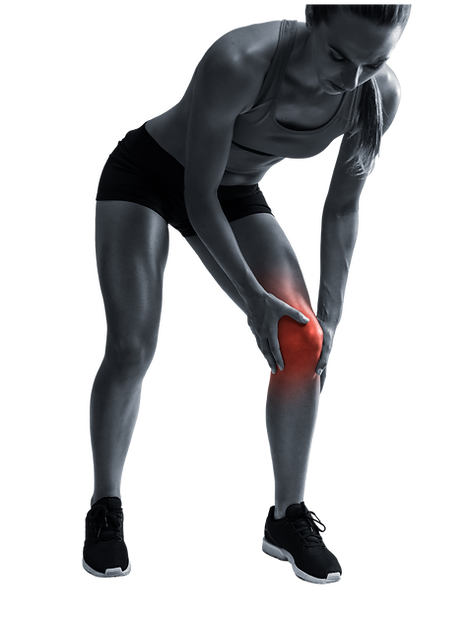

Running has been my passion since I was 35 years old. Becoming more fit, strong, focused and disciplined to challenge myself is the most rewarding part of the sport. Over the years I’ve had a roller coaster of injuries - both from running with horrible shoes (getting shin splints) to simply walking too hard on my feet while wearing sandals and snow boots. It was no fun getting tendinitis and then sesamoiditis; each injury at 37 and 38 years old, respectively, set me back a month or two in running.
At 40 years old, I started feeling some tenderness on the side of my knee, then my kneecap developed pain - as if someone had taken a baseball bat to my knee! The money I spent on creams, braces, tapes and pain killers curtailed the discomfort for a while and sometimes running loosened the tightness that came and went over the following years.
Listening to seniors talk about their ‘old used up joints’, knee replacement surgery and getting physical therapy, made me feel confident that since I’m a runner I’ll be in great shape for years to come!
Recently, at 45 years old, there was a nagging bone-on-bone pain in my knee that I shrugged off. I had this pain before, and it went away. Maybe it’s the weather. Maybe I just had a bad long run that weekend.
Something told me it was more than just a sore muscle or tendon. Walking down stairs was torture and this time, the pain was a daily occurrence. No medication, brace or topical solution solved the problem. This wasn’t a normal ‘injury’.
I finally gave in and made an appointment with an orthopedic specialist last June, hoping an x-ray would show some kind of sprain or inflammation. At Atlantic Orthopedics and Sports Medicine in Downtown Brooklyn, Dr. Patrick Jean-Pierre, MD, examined me after I casually said to one of his assistants, “This knee’s been a problem for years, so I just want to rule out arthritis.”
Guess what…It was arthritis! At 45?
How could this be?
The Board Certified Internal and Non-Operative Sports Medicine doctor showed me an x-ray of a perfectly healthy knee with a good amount of cartilage keeping the joint fluid with shock absorbency…Then there was MY knee. He pointed to the narrowing space between my joint that had a pencil thin cushioning of cartilage left. Thankfully, I was diagnosed with mild-to-moderate arthritis.
“I have patients who are in their mid-thirties, who never exercise and develop arthritis,” the specialist told Preferred Health Magazine. “There’s no telling when each person’s joints will wear down. No one is too young to have arthritis - especially when you’re talking about young athletes, too, who overuse their joints from a young age.”
With the stigma attached to having arthritis before one’s senior years on my mind, I realized that this was not an ‘injury’ that I’d heal from. It was a permanent diagnosis of painful days ahead. However, the team at Atlantic Orthopedics and Sports Medicine offered treatment options and education on coping with joint pain and that’s when I started doing my research.
Physical therapy wasn’t an option yet since I needed to be pain-free to move my leg altogether. I’d heard of cortisone shots and acupuncture and other such interventions. So, when I asked Dr. Jean-Pierre about my options for treatment, he showed me a few videos of athletes who underwent Orthovisc hyaluronic acid injections, which provide temporary relief from inflammation and stiffness.
Another treatment option was PCP (Platelet-Rich Plasma (PRP). This regenerative therapy involves drawing a patient’s blood, which is spun in a centrifuge to concentrate the platelets and growth factors. It is then injected back into the knee joint to reduce pain and stimulate healing.
With Visco supplementation therapy being more affordable and less invasive, I did more research on the procedure and asked Dr. Jean-Pierre - who would administer the injections - all of the vital questions. Since this fluid mimics the natural lubricant found in the joints, I wondered how it could help my condition for years to come.
What is the procedure for injections?
Injections are typically administered in the doctor’s office using an ultrasound machine to source the joint and site of treatment. The area is sprayed/numbed with a mild numbing anesthetic. The hyaluronic fluid is injected into the joint, which takes less than one minute, and the patient can leave without recovery/down time immediately after.
How many treatments are needed for visco supplementation and when do patients feel results?
Typically, a minimum of three treatments are required - one per week. Patients usually feel results 6 weeks after their final injection, as it takes weeks and months sometimes for the gel injections to gradually coat and properly lubricate the joint. After three injections, the orthopedic doctor said, the knee has enough ‘juice’- almost as if it’s a brand new joint that will sustain activities for months to come with the restored fluid.
What should you not do after knee injections?
According to Dr. Jean-Pierre, patients should refrain from lifting heavy objects and participating in impactful sports for 48 hours after injections are recommended. It might seem strange, but patients are also advised to avoid swimming or sitting in a body of water for at least 72 hours to allow the injection site to heal.
However, Dr. Jean-Pierre said some of his patients rode their bicycles home right after their injections. “Light walking and biking are fine - but if you’re going to do any sports or heavy impact activities, wait a few days,” he said.
How long do the effects of injections last?
Although the lasting effects of injections are different for everyone - and some people might need different types of injections - most of the joint lubricating fluid lasts at least six months. Some of his patients have had up to 18 months of relief, as Dr. Jean-Pierre notes that more frequent use of the joint wears the fluid down as if it were natural cartilage.
What if a patient has severe arthritis?
For some, steroid injections may be an option, but orthopedic doctors would most likely offer anti-inflammatory medications and in extreme cases, knee replacement surgery. Of course, it’s best to refer to your specialist/doctor for options and treatment. Each injection I received in July inched me closer to relief and when I told my friends/family I have arthritis, the shocking “You’re too young for that!” “So early? It must be the running!”
All of the statements were incorrect, old-fashioned thinking and old-wives tales, considering most older people I knew never ran a day in their lives and had joint issues since they were younger as well.
So, what’s the myth about being young with joint pain? According to the Arthritis Foundation, “There are close to 300,000 children in the U.S. who have been diagnosed with juvenile arthritis (JA). Many were diagnosed as infants. And, while 1 in 4 adults in America has been diagnosed with arthritis, not everyone will be. It is increasingly common as we age, but not inevitable.”
Does cold/wet weather impact arthritis?
The Arthritis Foundation states,“Not quite.
Weather certainly affects how we feel, but it doesn’t change the nature of arthritis or cause flare-ups. People with arthritis often report that they notice more pain when the weather changes. But even those in warm and dry climates feel arthritis pain. People may even move to these climates to feel better. But eventually they will recalibrate to their new climate, and changing weather can make them feel temporarily worse again.”
Since my last injection, I’ve begun a healthy stretching/running routine and my joint is fluid, pain free and I’m relieved that I took action against this stereotyped ailment that plagues humans regardless of how ‘young’ they are.
Remember, movement is medicine and you’re never too old/young to strengthen your muscles and make a comeback to a better you!


Dr. Patrick Jean-Pierre is Board Certified in both Internal Medicine and Sports Medicine, and a Diplomat in Integrative/Regenerative Medicine by the American Academy of Anti-Aging Medicine. Dr Jean-Pierre is also fellowship trained in the evaluation, diagnosis and treatment of musculoskeletal injuries. He treats patients of all activity levels; he is a former assistant team physician for high school and Division I college athletes. He worked closely in his fellowship under the physicians responsible for the medical care of the NFL’s Detroit Lions and MLB’s Detroit Tigers.
https://www.atlanticsportsmed.com/patrick-jean-pierre-md.html