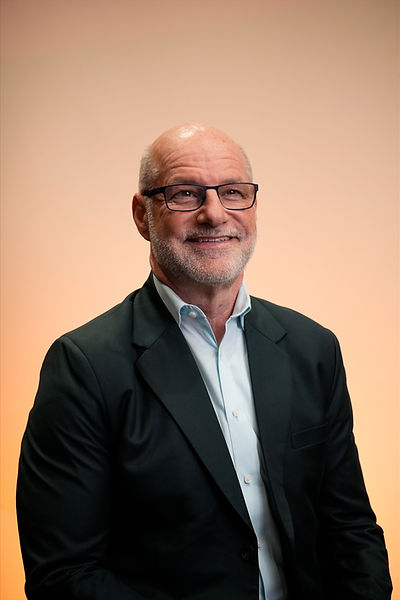
By Angelina Cappiello
In a world where technology is reshaping the way we understand the brain, few innovators have devoted as much attention to the power of neurotechnology as Dr. Patrick Porter. Through his groundbreaking work with BrainTap, Dr. Porter is exploring how light, sound, and guided meditation can help support the brain’s natural ability to regulate, focus, and recover. Today, that work is opening new conversations around children on the autism spectrum, where challenges with stress, sleep, attention, and sensory regulation can profoundly affect daily life. Rather than simply asking what is different about an autistic brain, BrainTap invites us to consider a more hopeful question: What if we could help the brain find greater balance? As research into neuroplasticity continues to evolve, Dr. Porter’s vision places technology in service of one of the most extraordinary capabilities we possess—the brain’s ability to adapt, learn, and change.
PHM: Let's start with the basics. For parents who have never experienced BrainTap, what exactly is the technology doing to the brain—and how does the combination of light, sound and guided visualization work?
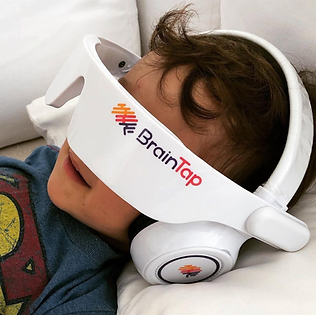
Dr. Porter: BrainTap is designed to use rhythmic sensory input—light and sound—along with guided visualization to encourage the brain toward patterns associated with relaxed attention. The audio can include binaural beats and isochronic tones, while the visor provides pulsing light. The underlying concept is called brainwave entrainment or the frequency-following response: neural activity can become more synchronized with a repeated external rhythm. The guided visualization adds a mental component, helping the user focus attention, rehearse constructive thoughts, and relax. I describe it as a wellness technology intended to support calm, focus, sleep habits, and self-regulation—not as a device that diagnoses or treats a neurological condition.
PHM: You've spent considerable time exploring BrainTap's potential for children. What first led you to investigate whether this technology could help children on the autism spectrum?
Dr. Porter: What interested me was not the idea of “changing autism,” but the possibility of supporting areas that can be difficult for some children—especially stress regulation, sleep, attention, and the ability to settle the nervous system. BrainTap's broader research has examined autonomic measures such as heart-rate variability, stress, sleep, and brainwave activity. Because many autistic children can experience heightened stress or sensory load, it is reasonable to investigate whether a non-invasive regulation-oriented wellness tool may be useful as an adjunct. That question still requires careful autism-specific research.
"I would be more interested in whether we can support a calmer, more regulated state in which that individual child can sleep, attend, learn, communicate, and tolerate sensory demands more comfortably."


PHM: When we talk about autism, we're talking about a spectrum with very different challenges from one child to another. What differences in brain function or brainwave activity do you see as particularly relevant when working with children with autism?
Dr. Porter: The most important point is that there is no single “autistic brainwave pattern” that applies to every child. Autism is heterogeneous. Research has reported differences in connectivity, sensory processing, attention, and autonomic stress regulation in some autistic populations, but those findings vary considerably by individual.
So, I would not begin by trying to force a child into a supposedly “normal” EEG pattern. I would be more interested in whether we can support a calmer, more regulated state in which that individual child can sleep, attend, learn, communicate, and tolerate sensory demands more comfortably.
PHM: What have you personally observed in autistic children who have used BrainTap? Are there changes you've seen in areas such as attention, focus, emotional regulation, sleep, communication, sensory processing or behavior?
Dr. Porter: What has been especially encouraging is the feedback we've received from clinicians and parents.They have reported that some children using BrainTap begin sleeping better, show improved emotional regulation, and seem better prepared for learning. We call this process “brain prep” or “brain training.” The idea is that when the brain and nervous system are in a calmer, more regulated state, the child may be better positioned to focus, learn, communicate, and engage with the world around them.
These are meaningful real-world observations, but I am careful to distinguish them from evidence that BrainTap treats autism itself. The literature we have reviewed also includes studies of sensory and binaural-beat interventions in autistic children reporting changes in qEEG, sensorimotor measures, behavior, and memory. Those findings support continued research, while recognizing that every child is different and responses can vary.
PHM: Can you tell us about some of the children or families you've worked with whose experiences particularly convinced you that BrainTap could have a meaningful role in supporting children with autism?
Dr. Porter: What stands out to me are the repeated reports from parents and clinicians describing children who begin sleeping more consistently, regulating their emotions more effectively, and arriving at school or therapy more ready to learn. That is why we describe BrainTap as a form of brain prep or brain training—helping create a more regulated state before asking the child to concentrate, communicate, learn, or perform.
Those family experiences are important because they show us what outcomes deserve further scientific study, while still recognizing that individual experiences are not the same as controlled clinical evidence.
PHM: What do you believe is happening neurologically when a child with autism uses BrainTap?
Are you attempting to regulate brainwave patterns, improve nervous-system regulation, reduce stress—or something else?
Dr. Porter: The working model is regulation rather than correction. Rhythmic auditory and visual stimulation is intended to encourage frequency-following responses, while the relaxation component may support a shift away from a high-arousal stress state. In BrainTap research with adults, a single session has been associated with increased heart-rate variability and parasympathetic activity and reduced stress index and heart rate. We can assume the same magnitude of effect in autistic children, but autonomic regulation is a reasonable mechanism to investigate.
PHM: Parents often ask whether environmental stressors, inflammation, toxins, nutrition, gut health or other factors play a role in autism. What does the evidence actually tell us, and where do you think more research is needed?
Dr. Porter: Some of those areas—particularly immune signaling, inflammation, metabolism, the microbiome, and environmental exposures—are active fields of research. But association does not prove causation, and evidence is not strong enough to tell parents that a particular toxin, food, inflammatory marker, or gut finding “caused” their child's autism. Research is needed that is longitudinal, well controlled, biologically precise, and able to separate subgroups within the spectrum. We should also distinguish research on autism biology from interventions aimed at improving general health or co-occurring challenges.
PHM: There is still a great deal we don't know about what causes autism. Based on your experience researching the brain, what do you believe are some of the major factors contributing to autism?
Dr. Porter: I want to be careful here, because autism is complex and I don't believe we can point to one single cause. What I can say is that, in our broader brain-fitness model, we look at four major areas that can contribute to brain dysfunction or dysregulation: toxins, trauma, thoughts, and technology. These are not established as four causes of autism, but they are areas we believe deserve attention when we're looking at overall brain health.
First is toxins. We live in an environment where the brain and body may be exposed to a wide variety of stressors—from air and water quality to highly processed foods, excessive sugar, certain environmental exposures, and substances the body has to metabolize and clear. Nutrition and detoxification are major themes in our Brain Fitness Blueprint because what happens in the body can influence how efficiently the brain functions.
Second is trauma. Trauma can be emotional, physical, or neurological. A fall, concussion, significant stressor, or difficult medical experience can affect the nervous system and alter patterns of regulation. We know that trauma can influence sleep, stress responses, emotional regulation, and brain function.
Third is thoughts. In adults, repetitive negative thinking and chronic stress can keep the nervous system in a heightened state. With many children on the spectrum, especially those who are minimally verbal, they may not be able to articulate what they are experiencing internally. That makes regulation even more important. We know BrainTap can increase alpha activity, and alpha is associated with a relaxed, alert state. We've also had clinicians and parents report that some children begin communicating more after becoming better regulated. I would describe that as an observation we want to study—not as evidence that increasing alpha causes a non-speaking child to begin speaking.
Fourth is technology. Technology can be tremendously beneficial, particularly for communication and learning, but excessive screen use and constant stimulation can also work against healthy sleep, attention, recovery, and nervous-system regulation. Our Brain Fitness Blueprint specifically identifies excessive screen time and constant connectivity as modern lifestyle factors that can contribute to mental fatigue and cognitive strain.
So when I think about autism and brain health, I don't think in terms of one cause. I think about the total environment in which that developing brain is functioning and ask: What can we do to reduce unnecessary stressors and help that brain become as regulated, resilient, and prepared for learning as possible?
PHM: Let's talk about the research. What scientific studies have been conducted on BrainTap or audiovisual brain entrainment, and what have those studies demonstrated? And specifically, have there been studies involving children with autism?
Dr. Porter: The broader literature on audiovisual and auditory beat stimulation includes randomized trials, pilot studies, and reviews examining anxiety, cognition, pain, sleep, brain activity, and autonomic measures. BrainTap-specific work has reported outcomes involving HRV and parasympathetic activity, stress index, sleep quality, qEEG, mood, and related wellness measures, primarily in adults. Autism-specific research exists for related sensory/entrainment technologies: a randomized placebo-controlled study of 84 autistic children using the Mente Autism neurofeedback system, which included binaural beats, reported changes in qEEG, posturography, and standardized behavioral measures. Another study included a subgroup of 10 autistic children exposed to light plus binaural beats and reported changes in brainwave measures and memory. These are not the same as a controlled trial of the BrainTap headset for autism.
PHM: If there are autism-specific studies, what were the study designs, how many children participated, what outcomes were measured, and what were the results?
Dr. Porter: Two studies summarized in BrainTap's literature review are especially relevant. Carrick and colleagues (2018) used a randomized placebo-controlled design with 84 children with autism over 12 weeks using a neurofeedback device that included binaural beats; outcomes included qEEG, posturography, and standardized behavioral questionnaires, with significant changes reported. Calomeni and colleagues (2017) studied 75 participants across several groups, including 10 children with autism; light plus binaural-beat stimulation affected alpha and sensorimotor-rhythm activity and the authors reported memory gains. In addition, a 2026 dissertation in the uploaded library followed 12 adolescents with ASD symptoms in an open, one-arm repeated-measures study using photobiomodulation plus a frequency-based wellness bed—not the BrainTap headset. Neural-Chek ECG/HRV measures showed a modest statistically significant reduction in Stress Index over repeated observations and increases in HRV measures. Only four participants had a clinical ASD diagnosis, so the findings are preliminary and cannot establish causation.
PHM: How do you distinguish between an encouraging anecdotal result—such as a parent saying, "My child's behavior completely changed"—and evidence that would meet the standards of a clinical research study?
Dr. Porter: An anecdote is a signal, not proof. It can help identify what we should measure, but it does not control for expectation, maturation, concurrent therapies, sleep changes, school changes, placebo effects, or natural variability. Clinical evidence requires a defined population, standardized intervention, validated outcomes, adequate sample size, appropriate comparison or control conditions, statistical analysis, transparent reporting, and ideally replication by independent groups. For autism, blinded assessment and objective measures are particularly valuable.
PHM: What age is appropriate for introducing BrainTap to a child? And what does a typical session look like for a young child who may have difficulty sitting still or tolerating sensory stimulation?
Dr. Porter: BrainTap's technical material has described children as young as about five using the system and notes that a child generally needs to tolerate sitting for roughly 10 to 20 minutes. Current safety guidance emphasizes adult supervision, age-appropriate sessions, and monitoring. With a sensory-sensitive child, I would prioritize comfort over completing a full protocol: begin conservatively, keep intensity low, and stop if the child is distressed. Parents should discuss use with a pediatric or healthcare professional when there are medical, neurological, or significant sensory concerns.
PHM: Are there children who should not use the BrainTap headset? What precautions should parents know about, particularly regarding photosensitivity or seizure disorders? BrainTap's own technical material notes that flashing lights can trigger seizures in some people and recommends avoiding the light component for those with seizure disorders.
Dr. Porter: Yes. The flashing-light component deserves specific caution. BrainTap's technical materials advise people with epilepsy, seizure disorders, photosensitivity, light sensitivity, or other neurological concerns to consult a qualified healthcare professional before using the headset. For individuals with a known seizure disorder or sensitivity to flashing light, the light component should be avoided. Children should always use BrainTap under appropriate adult supervision, and parents should consult their child's pediatrician or healthcare professional when there are neurological, medical, or significant sensory concerns.
One important point for parents is that the BrainTap experience does not have to begin with the headset. Parents and clinicians have reported favorable experiences using the BrainTap app and audio sessions alone, including observations of improved sleep, greater calm, and better attention. These are parent and clinician observations rather than evidence that the app treats autism, but they can provide a very gentle way to introduce the BrainTap experience.
In fact, for a child who is hesitant about wearing something on their head or who is particularly sensitive to new sensory experiences, I believe this may be one of the best ways to begin the journey. Start with the audio from the BrainTap app in a comfortable environment and allow the child to become familiar with the sounds, the voice, and the relaxation experience without introducing the visor.
Parents can also model the experience themselves. A parent might use the BrainTap headset while remaining in view of the child, allowing the child to watch without pressure or expectation. Children often become curious about what their parents are doing. Instead of forcing the headset onto a child who may already feel overwhelmed by sensory stimulation, we can allow familiarity and curiosity to develop naturally.
Then, if the child begins asking about the headset or expresses an interest in trying it, the parent can gradually introduce it—with supervision, low stimulation, and sensitivity to the child's comfort level. We never want the experience to become another source of stress.
That's why I often think of this as a progressive introduction: audio first, modeling second, and the headset only when the child is comfortable and interested. The objective is not to force compliance. The objective is to create a positive environment where the child can experience relaxation, calming, better sleep preparation, and what we call brain prep or brain training—helping the brain become more regulated and ready for learning.
**And throughout that process, safety comes first. If there is any history of seizures, photosensitivity, unusual neurological symptoms, or concern about sensory tolerance, parents should involve the child's healthcare professional before introducing the flashing-light component. **
PHM: Dr. Porter, if you could change one misconception about autism—and one misconception about the brain's ability to change—what would you want parents to understand?
Dr. Porter: About autism, I would want parents to understand that a spectrum is exactly that: there is enormous individual variation, and no single story, cause, brain pattern, or intervention defines every child. About the brain, I would want them to understand that neuroplasticity is real throughout life. The brain can learn, adapt, and reorganize in response to experience. That does not mean every neurological difference should be “fixed,” nor does neuroplasticity guarantee a specific outcome. It means we can keep looking for safe, respectful ways to support each child's capacity to regulate, learn, communicate, and thrive.
Discover more about Dr. Patrick Porter’s work with BrainTap and his vision for harnessing the brain’s remarkable capacity to adapt, regulate, and grow—offering new possibilities and hope for children on the autism spectrum and the families who support them. Visit www.BrainTap.com.
Source Notes
• BrainTap Technical Overview, Version 8.0 (October 2023): audiovisual brain entrainment mechanisms; BrainTap research outcomes; children and safety guidance.
• BrainTap Literature Review, Version 7.0 (July 2023), and Version 6.0 (May 2022): broader audiovisual/auditory beat literature, including neurodevelopmental studies.
• Jennifer D. Lipper, Reducing Stress in Adolescents with Autism Spectrum Disorder Using Photobiomodulation and the Quantum Energy Wellness Bed (2026 dissertation): open one-arm study of 12 adolescents, repeated Neural-Chek ECG/HRV measures; intervention was PBM + QEWB, not the BrainTap headset.
• BrainTap Technical Overview, Version 11 (June 2026), located in the uploaded library: updated language stating BrainTap is a wellness device, not intended to diagnose, treat, cure, or prevent disease; updated child-supervision and safety wording.
EDITORIAL & MEDICAL DISCLAIMER
The views, opinions, and statements expressed in this interview with Dr. Patrick Porter are those of the interviewee and do not necessarily reflect the views or opinions of Preferred Health Magazine (PHM), its editorial team, or its affiliates. This interview is intended for informational and educational purposes only and is not intended to constitute medical advice, diagnosis, treatment, or a recommendation for the use of BrainTap or any other technology as a treatment for autism spectrum disorder (ASD). Any discussion of BrainTap technology, brain health, neurotechnology, autism, or potential benefits is presented for informational purposes and should not be interpreted as a claim that BrainTap diagnoses, treats, cures, or prevents autism or any other medical condition. Individual responses to wellness technologies may vary, and readers should consult a qualified healthcare professional regarding autism, developmental concerns, or any decision involving treatment or therapeutic interventions. Readers should not delay, discontinue, or replace evidence-based medical, behavioral, developmental, or therapeutic care based solely on information presented in this interview.